
Torn apart
Apartment buildings split in two by Russian bombs offer a brutal visual metaphor for Putin’s success in dividing the West over Ukraine

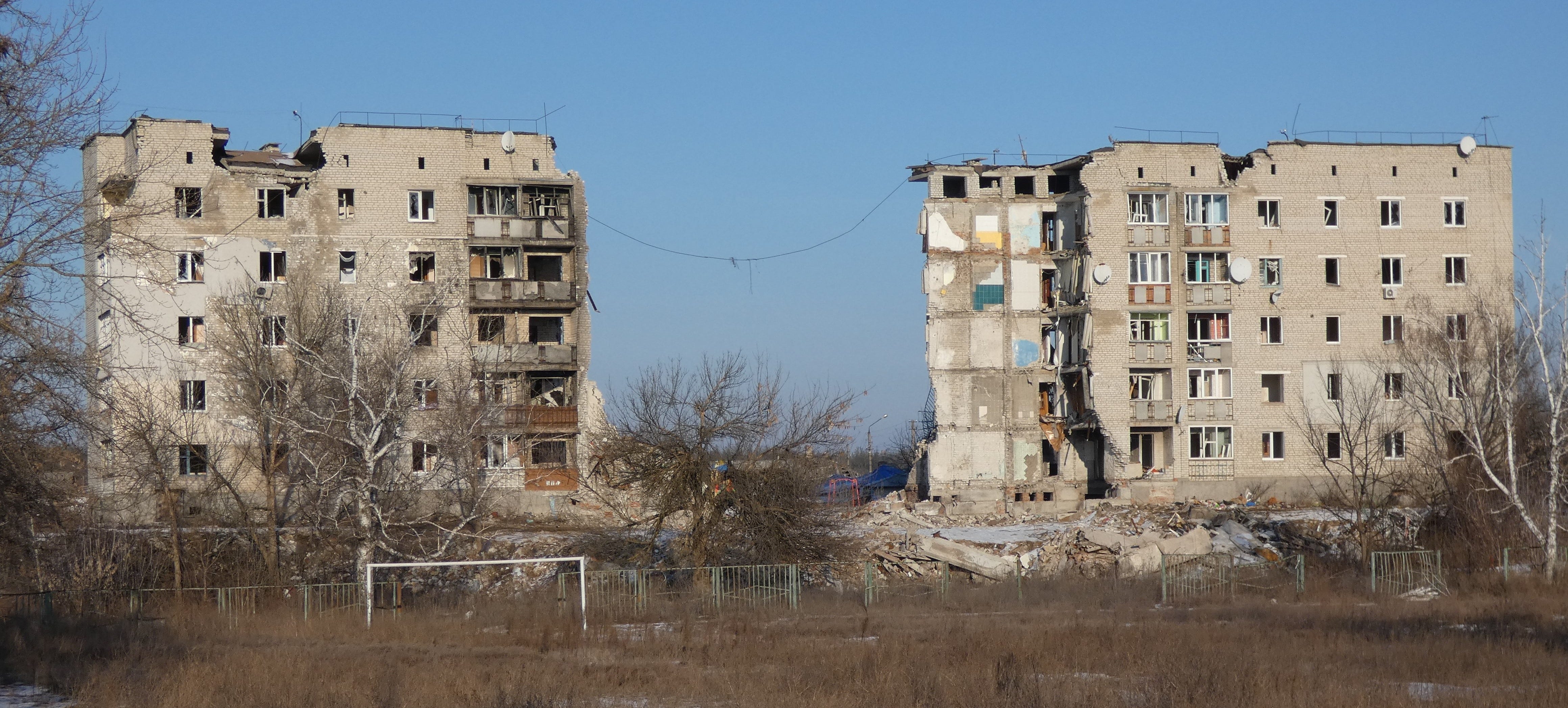
Fifty-four people died when a Russian warplane dropped a 1,000-pound bomb on an apartment building in the eastern city of Izyum on March 9, 2022. The victims included Olya and Vitaly Kravchenko and their three children. (c. Martin Kuz)
Olya Kravchenko and Olga Bezuglyi enjoyed the easy rapport of colleagues who had worked together for more than a decade. They met in 2011 when Olya started teaching kindergarten at an elementary school in Izyum, where Olga had served as staff assistant since the late 1990s. Over the years, as their familiarity bloomed into friendship, they visited one another’s homes now and then, sharing family meals and watching their children grow.
After Russia launched its full-scale invasion in February 2022, the two women stayed in Izyum, a city in eastern Ukraine with a prewar population of 45,000. Olya and her husband, Vitaly, both in their late 30s, shepherded their three young children from the family’s house to the basement of the apartment building where her father lived. Olga and her husband, Serhiy, both in their mid-50s and with two adult children who lived nearby, took refuge with her mother in the root cellar beside their home.
Russian forces advancing from the border 35 miles east pounded Izyum with missiles and artillery as Ukrainian troops attempted to hold the line on the city’s outskirts. Enemy fighter jets bombed buildings and swooped low on strafing runs. On the morning of March 9, with the Kravchenkos facing another day underground alongside several other families, a roar split the sky above them. In the next instant, the basement became a tomb.
A Russian warplane dropped a 1,000-pound bomb that drove the middle third of the five-story building into the ground. Fifty-four people died, most of them crushed in the basement beneath tons of concrete, brick and metal. They included Olya and Vitaly, the couple’s 3-year-old daughter, Aryna, and their two sons, Oleksii, 10, and Dima, 15. The strike also killed Olya’s mother and great aunt. In a random spin of war’s roulette wheel, her father survived, having moments before begun walking up to his second-floor flat to make tea for the family.
The Russians soon seized Izyum and held the city until the Ukrainian army regained almost the entire Kharkiv region that fall. Five months later, on a cold, clear morning in February, I stood outside the ruined apartment building, staring at the jagged gap at its center, a void into which so much life had vanished. I felt a surge of anger, and when I met Olga that afternoon, she gave voice to a fury that burned through the day’s chill.
“What kind of liberation? From who?” she said. “The country that has tried to keep Ukraine from being free is Russia.” She was referring to Russian dictator Vladimir Putin’s bizarre claim that he seeks to emancipate Ukraine from “Nazis.” We talked as Serhiy stoked the wood stove in the kitchen of the couple’s three-bedroom house, which had escaped the Russian shelling that damaged or destroyed three-fourths of the city’s homes. Artillery leveled the Kravchenkos’ house a mile a way and the school where Olga and Olya worked.
“Some people have thought that Russia was our friend. But this war will be what our children learn and their children learn,” Olga said. “They will know what Russia is.”


Left: The Kravchenko family (left to right): Olya holds Aryna; Oleksii stands in front of Dima; and Vitaly. (Courtesy photo.) Middle: Russian forces destroyed at least 10 apartment buildings in the Kyiv exurb of Borodyanka in the war’s first weeks. Right: Volodymyr Dudchenko and his daughter, Sonya. (c. Martin Kuz)
Ukrainians found a degree of reassurance back then in the West’s solidarity with their cause. The United States and Europe — if failing to supply Ukraine’s military with enough fighter jets, tanks, long-range missiles and other heavy weapons to reclaim more occupied territory — formed a mostly unified front in supporting Kyiv. (Hungary and MAGA Republicans stood out as embarrassing exceptions.) Much has changed in that regard even as Russia’s killing of civilians has remained a constant.
Since Ukraine’s stunning drone attack on Russian airfields on June 1, Moscow has retaliated with waves of airstrikes on residential dwellings in Kyiv and elsewhere. The deadliest incident occurred in the capital two weeks ago when a ballistic missile slammed into the top of a nine-story apartment building and, as happened in Izyum, pancaked a section of the structure onto the basement, killing 23 people.
The image of another apartment block cleaved in two, beyond conveying the war’s toll on civilians, struck me as a brutal visual metaphor for Putin’s success in dividing the Western coalition.

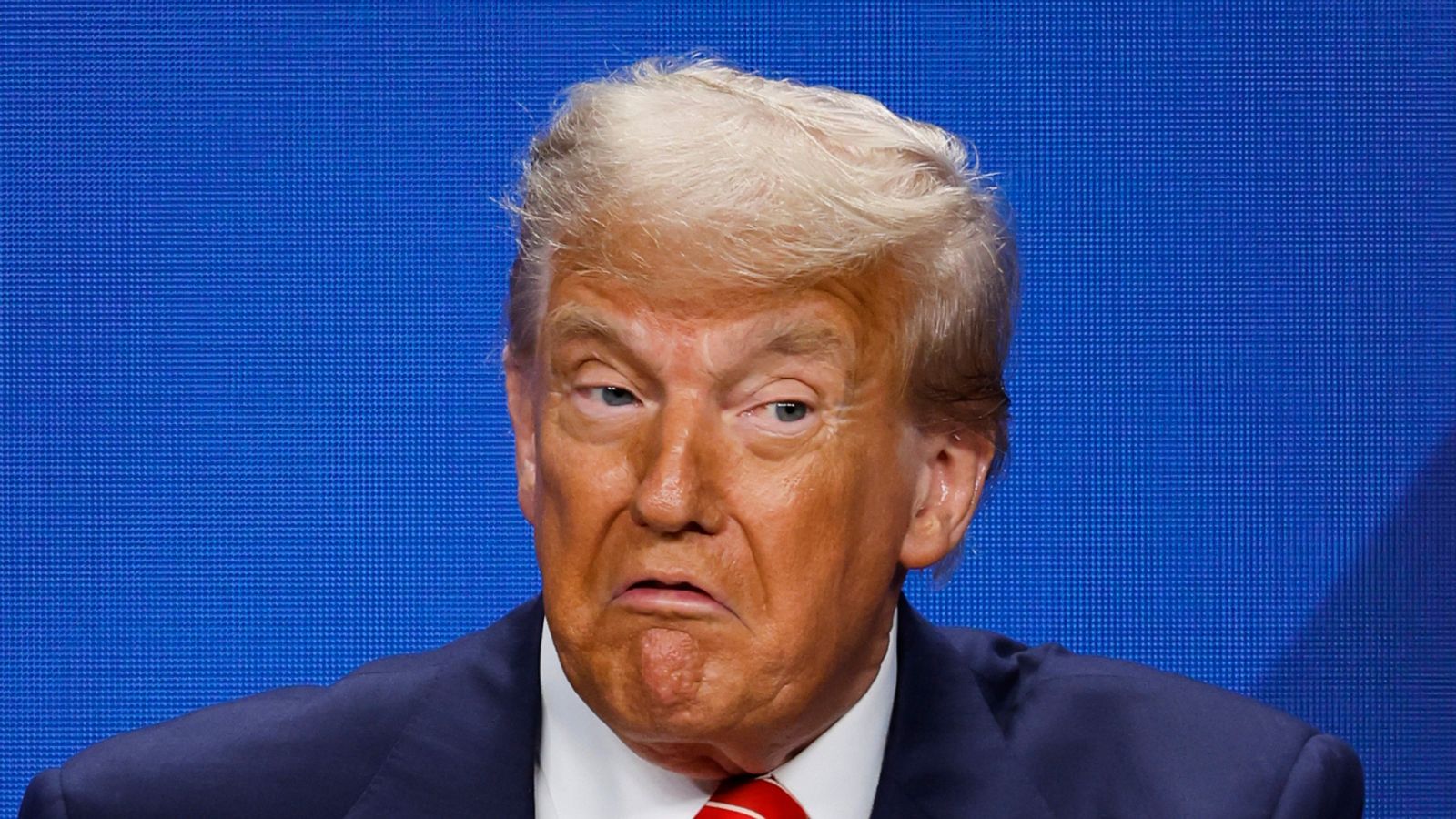
U.S. President Donald Trump, endowed with orange-hued, toad-faced apathy for Ukraine’s fate, represents the most obvious example of and reason for the schism. Trump has alienated the European Union and disparaged America’s NATO allies as he refuses to send more military aid to Kyiv and belittles Ukrainian President Volodymyr Zelensky. At the same time, rather than heed calls — even from brave Senate Republicans! — to tighten economic sanctions on Moscow, he has offered territorial concessions to Putin and whined about the G8 expelling Russia in 2014 after its initial incursion into Ukraine.
In short, Trump has all but made kissy noises in public toward Putin, and nobody would be surprised if that sort of thing goes on during their phone calls. Yet other cracks in the Western alliance have opened over Ukraine unrelated to the rupture between America and Europe. Earlier this month Slovakia for the first time joined Hungary in blocking an EU proposal to impose more sanctions against Russia, and Serbia announced a halt to arms exports to Ukraine, bending to pressure from Moscow.
Meanwhile, Europe’s small military industrial base relative to America’s — the result of an overreliance on U.S. protection since World War II — will hamper its capacity to fill weapons and intelligence deficiencies if Trump ghosts Kyiv. As European nations struggle to produce certain critical munitions for Ukraine, and with America now an unreliable ally, the continent’s leaders must reckon with their collective vulnerability in the event of a Russian attack on their soil. Concern over that prospect — some of it motivated by legitimate self-interest, much of it fanned by far-right nativists trafficking in disinformation and anti-Ukrainian sentiment — could further isolate Kyiv if Europe reduces its support.
There are wan glimmers of light poking through the deepening darkness. NATO’s member countries last week pledged to boost defense spending from 2 percent to 5 percent of each nation’s GDP by 2035. In theory, Ukraine will benefit from the increase, assuming Europe can crank up its arms manufacturing — an enormous assumption. Consider Germany, the continent’s largest economy, where the effort to restock and expand its weapons reserves to match Russia’s level of production will take decades. The same slow math applies to Europe as a whole.
The prognosis means that the near future for Ukraine will resemble the recent, devastating past, as Putin shows little interest in stopping his war and Trump shows less interest in compelling him to that end. Bombs will continue to split open the homes of Ukrainians and tear apart their bodies, their families, their daily lives.
In summer 2022, months before traveling to Izyum and glimpsing the severed apartment building where the entire Kravchenko family died, I encountered a similar tableau in the Kyiv exurb of Borodyanka. Russian forces had destroyed at least 10 apartment blocks prior to retreating from the area two months into the invasion. Missiles and bombs had cut several of the buildings in half, killing dozens of residents and displacing thousands more.
One of the blackened high-rises stood across the street from a playground. A light breeze softened the afternoon heat as children scurried about a pirate ship and Volodymyr Dudchenko pushed his 5-year-old daughter, Sonya, on a swing. He and his wife, Katya, had evacuated with Sonya when the war began, and returning to Borodyanka after the Russians withdrew, they found their flat in another building too damaged to inhabit.
The couple planned to salvage as many of their belongings as possible. In a few days, Volodymyr, 38, would drive Katya and Sonya to a relative’s house in a safer part of the country, and then he would come back to volunteer with the territorial defense force. He wanted to protect Ukraine, and he trusted the West to stand as one with his homeland.
“I believe in Europe and the United States,” he said. “We will fight Russia together.”
Etc.
— Neither Europe nor America has committed to deploying troops to Ukraine. As the war grinds on in its fourth year, and with the country desperate to replenish its military ranks, Ukrainian grandfathers continue to fill the trenches.
— The late Ukrainian author Victoria Amelina, who died in a Russian missile strike on a restaurant in 2023, won the Orwell Prize for political writing last week for Looking at Women Looking at War: A War and Justice Diary, released earlier this year. I wrote last year about her heroic efforts to preserve the writings of another Ukrainian author killed by Russia.
— My sincere thanks for reading. Please share Reporting on Ukraine with anyone you know with an interest in the country, and if you’re a free subscriber and you like what you see, I hope you’ll consider upgrading to paid. You can also support my self-funded reporting here. Thank you.